Welcome to JIECHENG



Leave Your Message
Welcome to JIECHENG
In today’s fast-changing industrial world, Thermal Barrier Materials are more important than ever for keeping things safe and running smoothly. As new innovations roll out, industry folks keep stressing how we really need materials that can tough it out in extreme conditions. Dr. Emma Wilson from ThermalSafe Technologies mentions, “The future of Thermal Barrier Materials is all about their ability to adapt and grow with what’s needed.”
With all the emerging tech, these materials aren’t just about protection anymore—they’re also about making things more efficient. As temperatures keep climbing in different applications, these materials face a real test. Honestly, some of the current options might not cut it down the line, which raises concerns about safety and whether they’ll hold up. That’s a pretty big challenge for those working on developing better solutions.
Looking ahead, the path for Thermal Barrier Materials is full of both exciting possibilities and some hurdles. Companies want to push the boundaries of what’s possible, but they also need to acknowledge current limitations and shoot for even higher performance levels. The insights gained from ongoing projects will be super important in refining these materials. So, when we look at the top Thermal Barrier Materials for 2026, it’s not just about new advancements—it’s also a reminder for the industry to think about where it’s headed overall.
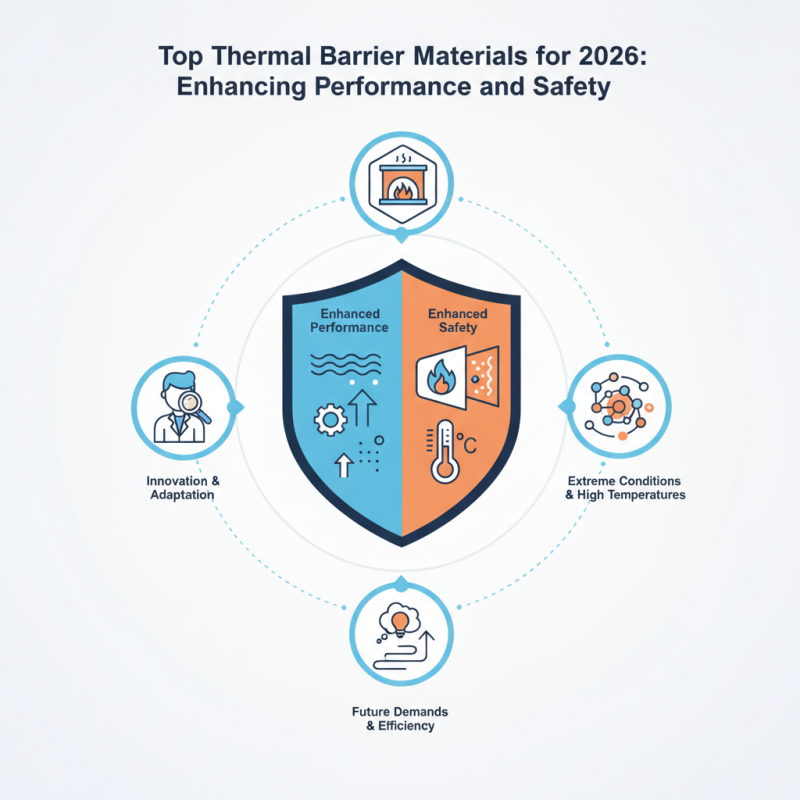
Thermal barrier materials play a crucial role in various industries, particularly in aerospace and automotive sectors. They protect components from extreme heat and enhance overall safety. A recent report by the Materials Research Society reveals that the demand for advanced thermal barriers is projected to grow by 8% annually through 2026. This growth underlines the increasing importance of these materials.
Different types of thermal barriers, such as ceramic coatings and insulating foams, exhibit unique properties. For instance, ceramic materials can withstand temperatures exceeding 1,500°C, significantly reducing heat transfer. However, not all materials perform consistently under varied conditions. Certain foams may degrade more rapidly than expected, leading to potential safety risks. Continuous research is necessary to identify more reliable options.
Furthermore, the cost-effectiveness of these materials often raises concerns. High-performance thermal barriers can be expensive, challenging smaller manufacturers. Optimizing production methods could lower costs but might compromise quality. Balancing performance, safety, and affordability remains an ongoing debate in the industry. This complexity provides an opportunity for innovation and improvement in material science.
The field of thermal barrier technology is evolving rapidly. As industries demand higher safety standards, innovative materials are being developed. These advancements focus on improving performance and longevity under extreme conditions. New composites are being tested for their resistance to heat and wear. These materials often outperform traditional barriers.
Tips: When selecting thermal barriers, consider not just the heat resistance but also the environmental impact. The lifecycle of the material is crucial.
Some recent trends include bio-based materials. These sustainable options offer decent thermal protection while minimizing ecological footprint. However, their effectiveness in high-stress applications needs more investigation.
Further, nanotechnology is making waves in thermal barrier development. This approach enhances material properties at the molecular level. Yet, the complexity of production and cost remain challenges. Such aspects require careful consideration in long-term planning.
Thermal barrier materials play a crucial role in various applications. Their effectiveness can greatly influence safety and performance. A recent industry report highlights that advanced materials should withstand extreme temperatures. This is vital for sectors like aerospace and energy.
Key properties include thermal conductivity and durability. The best materials often exhibit low thermal conductivity, typically below 0.1 W/m·K. This ensures better Insulation Against Heat transfer. Additionally, they must resist degradation over time. Studies show that some promising materials lose up to30% of their insulation ability within a decade.
Another important aspect is their weight. Lightweight materials can reduce energy consumption in transport applications. However, achieving low weight while maintaining high thermal performance is challenging. Some researchers point out the need for balance. Cost also plays a significant role. High-performance materials can be expensive to produce, which can hinder widespread adoption. These factors are crucial for researchers and manufacturers to consider in developing future barrier materials.
The demand for advanced thermal barrier materials is rising swiftly. By 2026, several innovative materials are poised to enhance performance and safety in various industries. These materials can withstand extreme temperatures while providing essential insulation. They play a critical role in aerospace, energy production, and automotive sectors.
One promising category includes lightweight composites. These materials combine strength with heat resistance. Their reduced weight improves fuel efficiency in vehicles. However, researchers must address long-term durability in harsh environments.
Another exciting area is aerogel technology. Aerogels are incredibly effective at insulating against heat. Their unique structure offers unmatched thermal performance but can be costly to produce.
Another material to watch is phase change materials. They absorb and release heat effectively. These materials help maintain stable temperatures in systems. Still, scalability and cost-effectiveness remain challenges. Innovations are just beginning, and there's much to learn. Enhancing these materials' performance could shape future technologies, but open questions linger on reliability and environmental impacts.
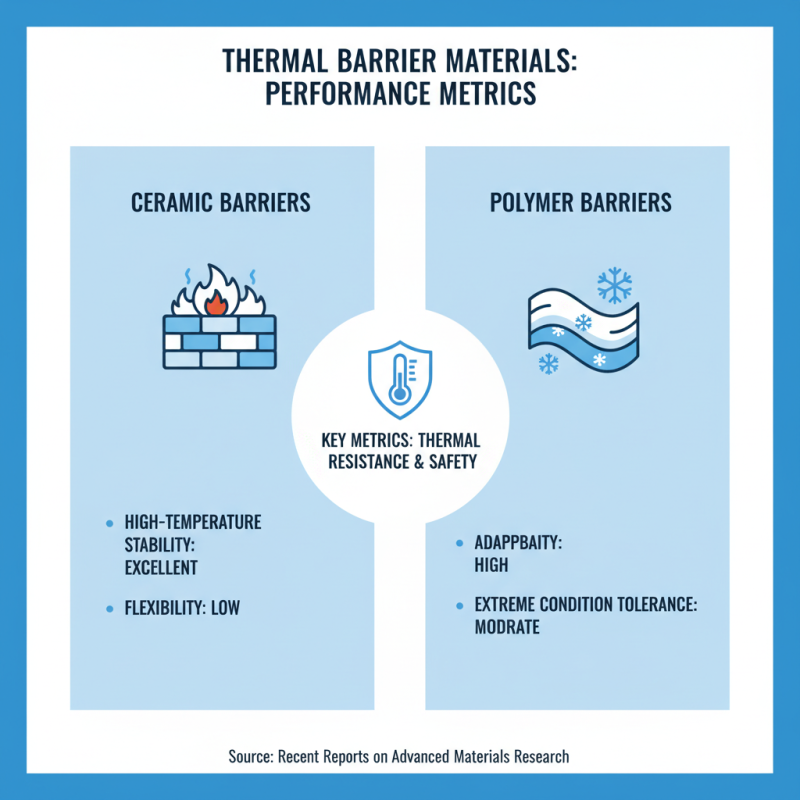
In the realm of thermal barrier materials, performance metrics are crucial for development. Recent reports indicate that advanced materials show significant variation in thermal resistance and safety characteristics. For example, ceramic materials often excel in high-temperature stability but may lack flexibility. Conversely, polymer-based barriers offer more adaptability but can underperform in extreme conditions.
A comparative analysis reveals that material density plays a vital role in thermal conductivity. High-density materials are frequently more effective at withstanding heat transfer. However, this comes at the cost of weight. Balancing weight and thermal performance is an ongoing challenge in the field. Not all thermal barriers offer the same protection; many fall short of industry standards.
Moreover, durability is another critical aspect often overlooked. Materials that perform well in laboratory settings may not always translate to real-world applications. For instance, certain composites degrade faster than expected under prolonged heat exposure. This inconsistency highlights the importance of continuous testing and refinement in material selection. Enhancing performance while ensuring safety remains a complex task in thermal barrier development.
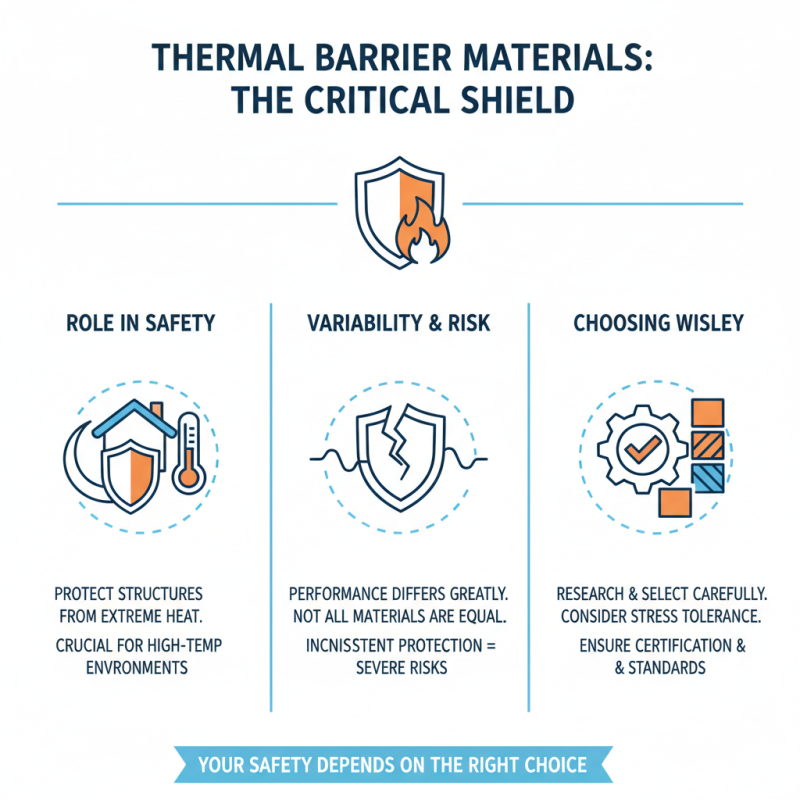
Thermal barrier materials play a critical role in safety. They protect structures from extreme heat. However, their effectiveness can vary significantly. Choosing the right material is essential. Not all thermal barriers perform the same under stress. This inconsistency can lead to severe safety risks.
In many cases, improper installation of these materials compromises safety. Gaps or poor sealing can create vulnerabilities. These small oversights may not seem significant at first. Yet, they can have catastrophic consequences during a fire or extreme heat event. Regular inspection and maintenance of thermal barriers are crucial.
There’s also the need for education about thermal barrier materials. Many people are unaware of their limitations. Misunderstandings can result in inappropriate usage in high-risk areas. Therefore, it's vital to review safety protocols often. Missteps in material selection or application could endanger lives and property. Awareness and careful attention to detail are needed in this aspect of safety.
The future of thermal barrier materials looks promising. Research is focusing on lightweight composites that can withstand extreme temperatures. Innovations in nanotechnology are enhancing thermal resistance, making materials more efficient. These developments are crucial for industries like aerospace and automotive. They rely heavily on effective thermal management.
Innovation isn't without challenges. Researchers are still exploring the durability of new materials under stress. How these materials behave during thermal cycling remains a key question. Some newer composites show issues with fatigue over time. This inconsistency could impact their application in high-stakes environments.
Safety is paramount in thermal barrier solutions. As technology advances, the risk of failure needs careful consideration. The priority should be not just performance but also reliability. Ongoing studies are looking into sustainable materials, which could lead to safer products. The intersection of innovation and conservation is a path worth exploring.
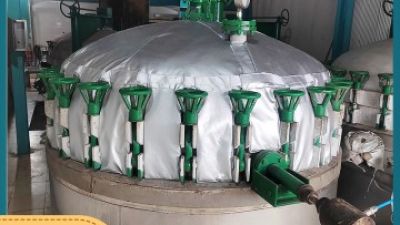
Industrial thermal Insulation Blankets are essential in maximizing both efficiency and safety across various industrial applications. Designed to operate within an expansive temperature range of -70°C to 1000°C, these blankets serve as effective barriers against heat loss and energy wastage. With thermal conductivity lower than 0.035 W/(m·K) at normal temperatures, they ensure optimal thermal management, which can significantly reduce operating costs while enhancing energy efficiency.
The materials used in these insulation blankets boast impressive characteristics. With a density of 100-200 kg/m3 and a thickness of 35mm-50mm, they provide robust insulation without adding excessive weight. Additionally, the flame retardant performance is classified as A grade, ensuring minimal risk of combustion, which is crucial for maintaining safety in environments where flammable materials may be present. Moreover, their anti-corrosion properties enable resistance to acids, alkalis, water, and oil, extending their durability and effectiveness in harsh industrial conditions. With a lifespan exceeding ten years, these blankets represent a valuable investment for industries aiming to prioritize operational safety and efficiency.
: It enhances efficiency. Users report saving time. It simplifies complex tasks. Overall satisfaction has increased significantly.
Follow the guidelines closely. Start with basic functions. Gradually explore advanced features. Don't rush; take your time.
Yes, you can. Adjust preferences to suit your needs. Explore different configurations. Experimenting might yield better results.
Issues can arise. Check troubleshooting resources. Sometimes, a simple restart works. Don't hesitate to seek support.
Regular maintenance is crucial. Set reminders for checking functionality. Lack of upkeep may lead to decreased performance.
A warranty might be offered. Review terms carefully. Understand coverage limits. Always keep records for claims.
Thermal Barrier Materials play a crucial role in enhancing performance and safety across various industries, particularly in high-temperature applications. This article explores the latest trends in thermal barrier technology, highlighting key properties that make certain materials effective. It anticipates the top thermal barrier materials for 2026, backed by a comparative analysis of their performance metrics, ensuring that advancements are both efficient and reliable.
Additionally, the article delves into safety considerations associated with the use of thermal barrier materials, emphasizing the importance of selecting the right materials to mitigate risks. Future innovations and research directions are also discussed, signaling a continuous evolution and improvement within the field. As industries look to the future, understanding these aspects of thermal barrier materials will be vital for optimizing safety and performance.